
Shoulder symptoms: when mobility is lost
The shoulder is our most mobile joint. Unlike other joints, the shoulder does not have a bone structure. It is held together by a complex system of muscles, ligaments, and capsules. However, great mobility also carries the risk of injury. Our quality of life and independence depend on a well-functioning shoulder. However, many structures are closely spaced, which can cause symptoms to overlap significantly.
Therefore, imaging diagnostic procedures such as ultrasound, MRI, and X-ray must be performed before any intervention in order to select the optimal therapy. The most common shoulder disorders are injuries to the rotator cuff, impingement syndrome, AC arthrosis, disorders and injuries of the biceps tendon, calcium deposits in the shoulder, fractures, or shoulder instability—shoulder dislocations. If conservative treatment measures do not help, the patient can undergo shoulder surgery. In most cases, minimally invasive procedures are sufficient.

Your journey to recovery
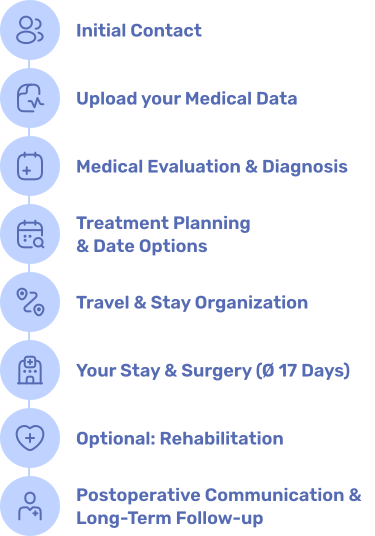
From your first contact to long-term follow-up, ENANDE guides you through every stage of your journey. We personalize your treatment and manage all logistics – from evaluation and travel to recovery – ensuring your focus remains on healing.



The first step toward a pain-free future is simple. Our expert team is ready to evaluate your needs and to design an individual treatment plan for you.
